The short answer: imperial yellow was the Qing court's exclusive glaze colour; incised (anhua) dragon is a palace vocabulary hidden under the glaze; and the stem bowl is a rarer ritual form than an ordinary bowl. Combined, a Guangxu yellow-glazed incised cloud-dragon stem bowl is a late-Qing official-ware piece that carries both ranked status and formal scarcity. Using a submitted piece as the example, this article explains its value logic through the ranked status of yellow glaze, the anhua technique, the scarcity of the stem form, and verifiable public results — with no discussion of attribution, only market and scarcity.
Why imperial yellow was exclusive: from 'jiao-yellow' to rank-coded porcelain
Yellow glaze, coloured by iron and fired as a low-temperature lead glaze, first appeared under Yongle, reached its height with the Hongzhi 'jiao-yellow' (delicate yellow), and remained an imperial monopoly through the Qing. The Qing inner court was strictly hierarchical: according to the Guochao guoshi, the Empress Dowager and Empress used yellow inside and out; the Imperial Noble Consort used yellow with white interior; consorts used yellow-ground green dragon; concubines used blue-ground yellow dragon; and so down the ranks. In other words, all-over yellow was the colour of the very top of the palace — never available to commoners or lower ranks.
This ranked attribute means yellow-glazed objects were, from birth, part of a 'royal narrative'; their value comes not only from craft but from this institutional scarcity.
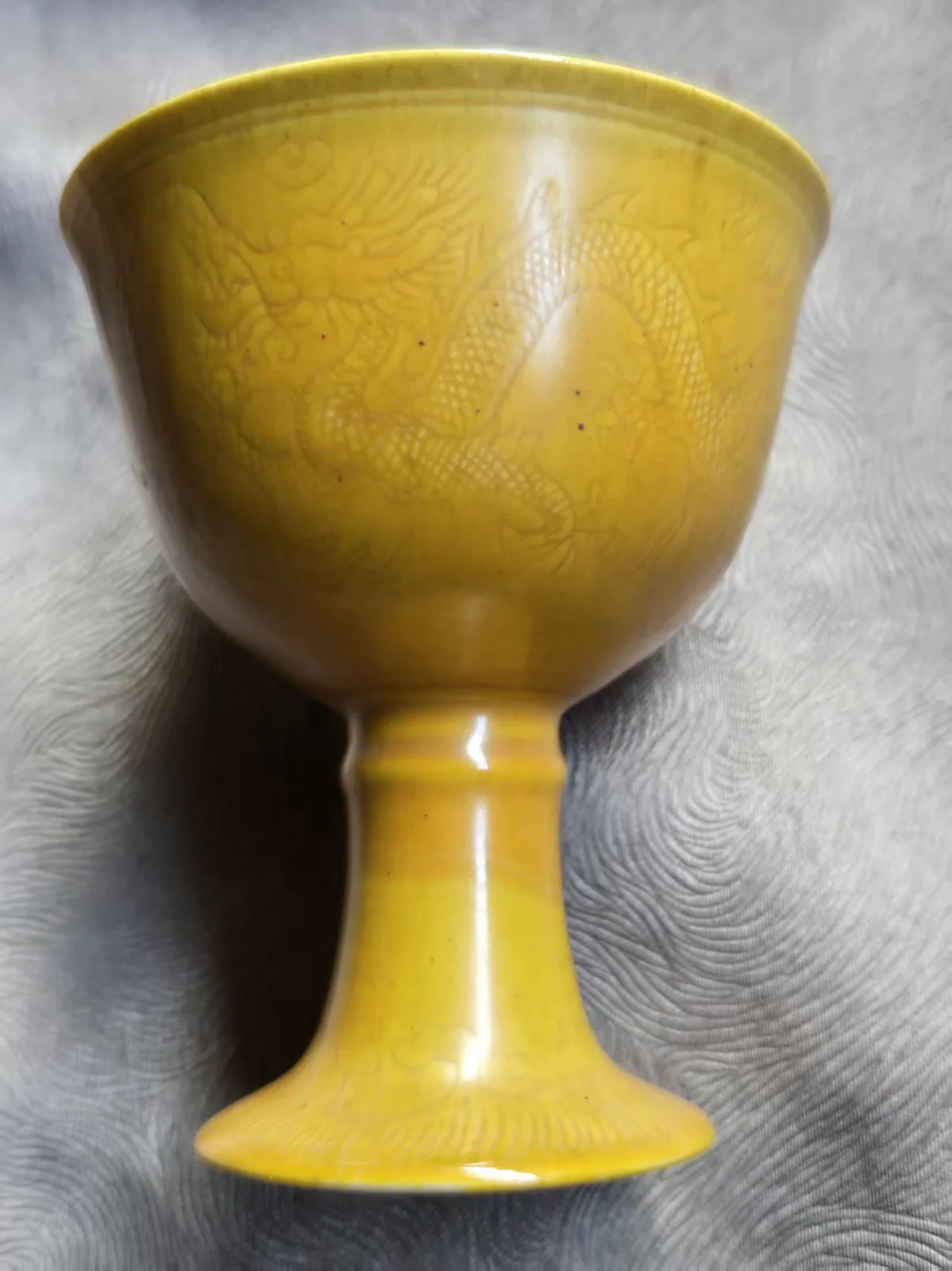
Incised (anhua) dragon: a palace vocabulary hidden under the glaze
Anhua ('hidden decoration') is made by lightly carving the design into the body before glazing the whole piece, so the motif shows only as subtle variations in glaze tone and light — no colour, no painting, relying entirely on the carving and glaze thickness. It is the extreme of the imperial kiln's restrained aesthetic. The dragon was an exclusively royal subject — a moving dragon chasing a pearl, with flames and cloud scrolls, all by regulation.
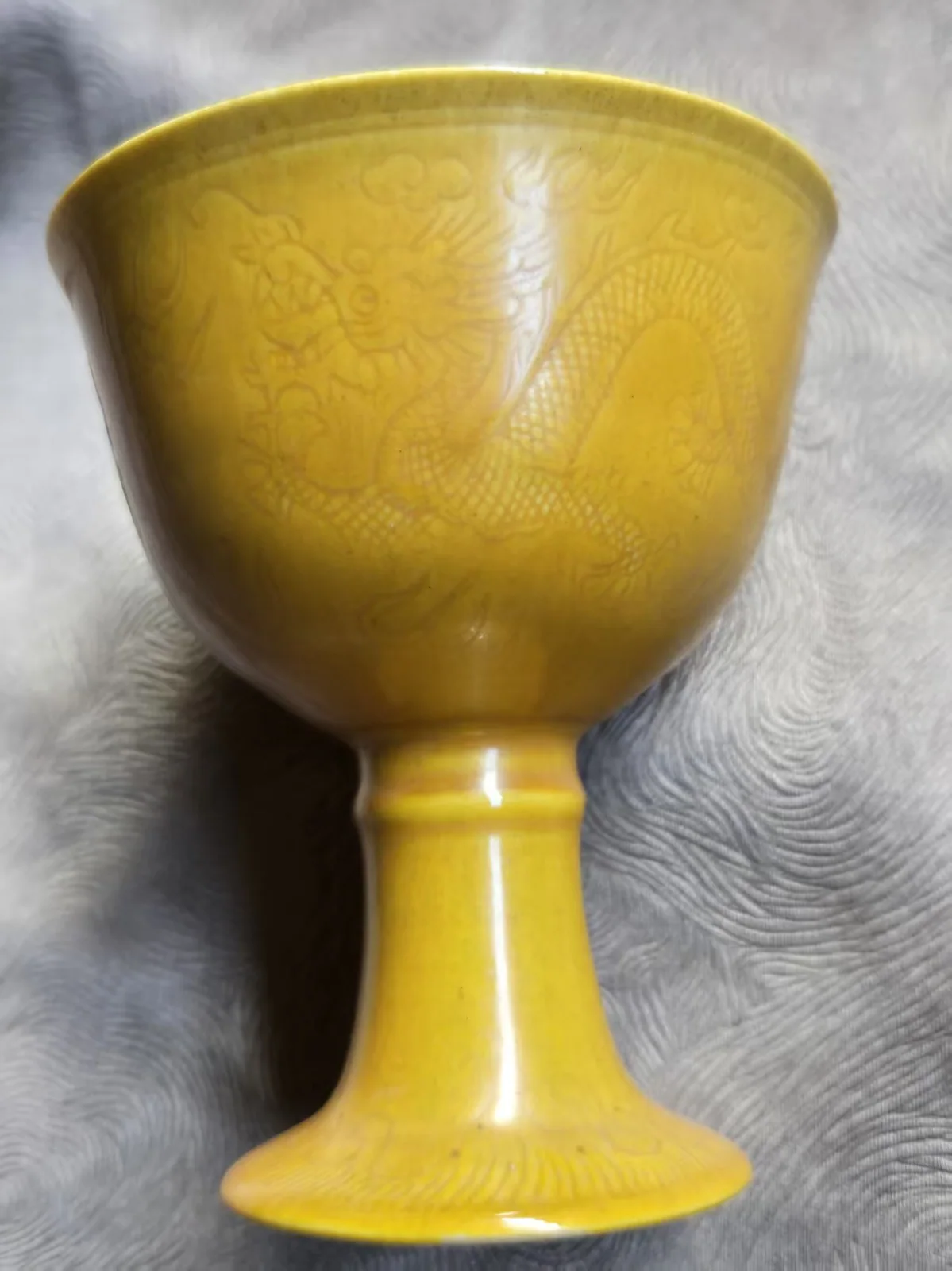
The stem bowl (ritual form): rarer than an ordinary bowl
The stem bowl (gaozuwan, also called target bowl) takes the form of metal and bronze ritual vessels — a bowl above, a tall foot below — used for ceremonial, offering and presentation wares, ranking above everyday bowls. Compared with an ordinary foot-ring bowl of the same decoration, stem wares survive in smaller numbers and are more carefully made, forming the more 'ritual' branch of the official-ware system.
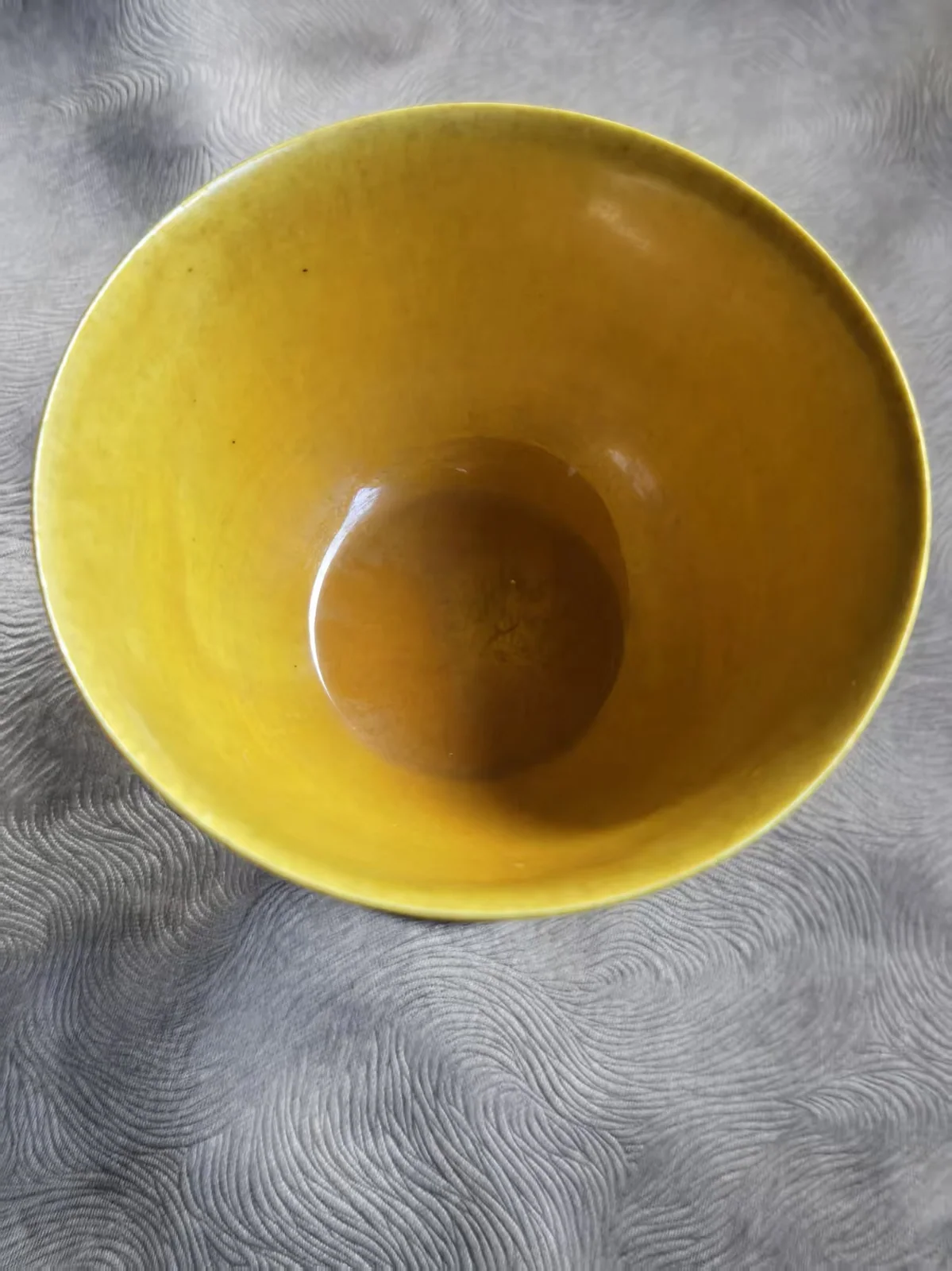
A concrete example: a Guangxu yellow-glazed incised cloud-dragon stem bowl
The following uses a submitted piece to illustrate the craft characteristics (describing only visible attributes, with no attribution judgement). The piece is covered in a yellow glaze of delicate, even tone; the exterior carries an incised underglaze cloud-dragon chasing-pearl design, the dragon's scales drawn in fine lines with flames and cloud scrolls around it, the carving fluent; it stands on a tall foot, the interior of which bears a six-character kaishu mark 'Da Qing Guangxu nian zhi' in underglaze blue. Its form, glaze and incised dragon are in the same lineage as the standard surviving late-Qing official yellow-glazed incised-dragon wares. Dimensions to be confirmed.
The value anchor: verifiable public results for yellow dragon official ware
Prices for yellow dragon official ware are set piece by piece on the public floor. The following are individually verifiable records (all in RMB, with approximate HKD in parentheses; the stem bowl is listed separately):
- Christie's, Guangxu yellow-glazed incised cloud-dragon stem bowl (with cover, 25.3 cm high) sold for USD 37,500 (c. HKD 290,000) — the key reference for same-reign yellow stem wares.
- Beijing Poly, Guangxu yellow-glazed carved dragon large bowl (23.5 cm diam.) sold for RMB 46,000.
- Huayi International, Guangxu yellow-glazed incised dragon bowl sold for RMB 48,300 (short hairlines at the rim).
- Shanghai Daoming, Guangxu yellow-glazed incised dragon bowl (15.6 cm diam.) sold for RMB 28,750.
- Duoyunxuan, pair of yellow-glazed incised dragon bowls (13.5 cm diam.) sold for RMB 13,000.
- Sotheby's, pair of Guangxu yellow-glazed cups estimate HKD 60,000–80,000 (2019).
These records reveal a clear price gradient: ordinary Guangxu yellow dragon bowls (foot-ring) mostly trade in the RMB 13,000–48,000 (c. HKD 15,000–55,000) range, while a same-reign piece promoted to the stem-bowl form already reached the HKD 290,000 tier at Christie's. Form is the key variable in the value differentiation of yellow official ware.
Why the stem bowl sits in the upper-middle of the value range
The scarcity premium is direct: the fewer comparables exist, the more fiercely each appearance is contested. Guangxu yellow incised-dragon bowls are already fine official-ware road, but the stem (ritual) branch survives in even smaller numbers and is more finely made; when a piece with clear provenance and outstanding glaze and carving appears, the price pushes upward. This is why reference estimates for such pieces are anchored to the comparable results of stem-form wares.
How such a piece reaches the market
If you hold a Guangxu yellow-glazed, incised-dragon or comparable official ware, we suggest: first send multi-angle photos (full form, anhua detail, stem foot, base mark) with dimensions; our specialists issue a written reference estimate range against public comparables; once aligned, we build a dedicated promotion page for global display. The promotion page for this Guangxu yellow-glazed incised cloud-dragon stem bowl is at the lot page; more porcelain on the platform are on the porcelain category page. The full path is in Consign and Process.
FAQ
- Why was yellow glaze exclusive to the court? The Qing used yellow glaze to mark inner-court rank; all-over yellow was reserved for the Empress Dowager and Empress, never for commoners or lower ranks, giving yellow an institutional scarcity.
- What is anhua (incised decoration)? The design is lightly carved into the body before the whole piece is glazed, so the motif shows only as subtle glaze-tone and light differences — no painting — representing the restrained aesthetic of the imperial kiln.
- How is a stem bowl scarcer than an ordinary bowl? The stem bowl takes a ritual-vessel form, used for ceremony, offering and presentation; it ranks above everyday bowls, survives in smaller numbers and is more carefully made — the more ritual branch of official ware.
- How do I consign such a piece? Send multi-angle photos with dimensions; our specialists issue a written reference estimate range against public comparables, then we build a dedicated promotion page — see Consign.