The short answer: Yongzheng black-ground (moydi) falangcai is the scarcest and most coveted branch of imperial falangcai. The black enamel ground is the hardest to fire and survivals are few; the Yongzheng reign pushed painted enamels to their aesthetic peak, and a black-ground bowl further painted with the 'Maodie' (longevity-butterfly) pattern is among the rarest of all. This article sets aside questions of attribution and simply lays out the firing thresholds, the scarcity and the verifiable public results.
What black-ground falangcai is: a Kangxi invention, perfected under Yongzheng
Black-ground (moydi) falangcai is a variety in which a black enamel is first laid as the ground over the white body, then painted with coloured enamels on top. The black ground is exceptionally hard to fire — too much and it turns dead, too little and it greys; only a few pieces achieve an even, lacquer-black ground, making it the hardest falangcai ground invented under Kangxi and the most difficult in every reign. The Yongzheng reign inherited the technique and refined the palette, pushing painted layers and shading to the peak of court taste.
Its hallmarks: an all-over black ground, dense painted decoration, and a reign mark on the foot — almost always an imperial ware, with very little in private hands.
Why it is scarce: three natural thresholds of black-ground falangcai
- Exceptionally low output. Across the Kangxi, Yongzheng and Qianlong reigns, imperial falangcai porcelain totals only about 400 pieces, over 90% in the Taipei and Beijing Palace Museums; the black-ground branch is a fraction of that fraction, rarely seen in private hands.
- Hard to fire. The black enamel ground demands precise temperature control and repeated firings; the slightest deviation ruins it, so yield is tiny.
- Court monopoly. Falangcai was itself an inner-court imperial ware, and black-ground painted examples sit at its very apex — not a popular, civilian glaze.
A concrete example: a Yongzheng black-ground falangcai Maodie palace bowl
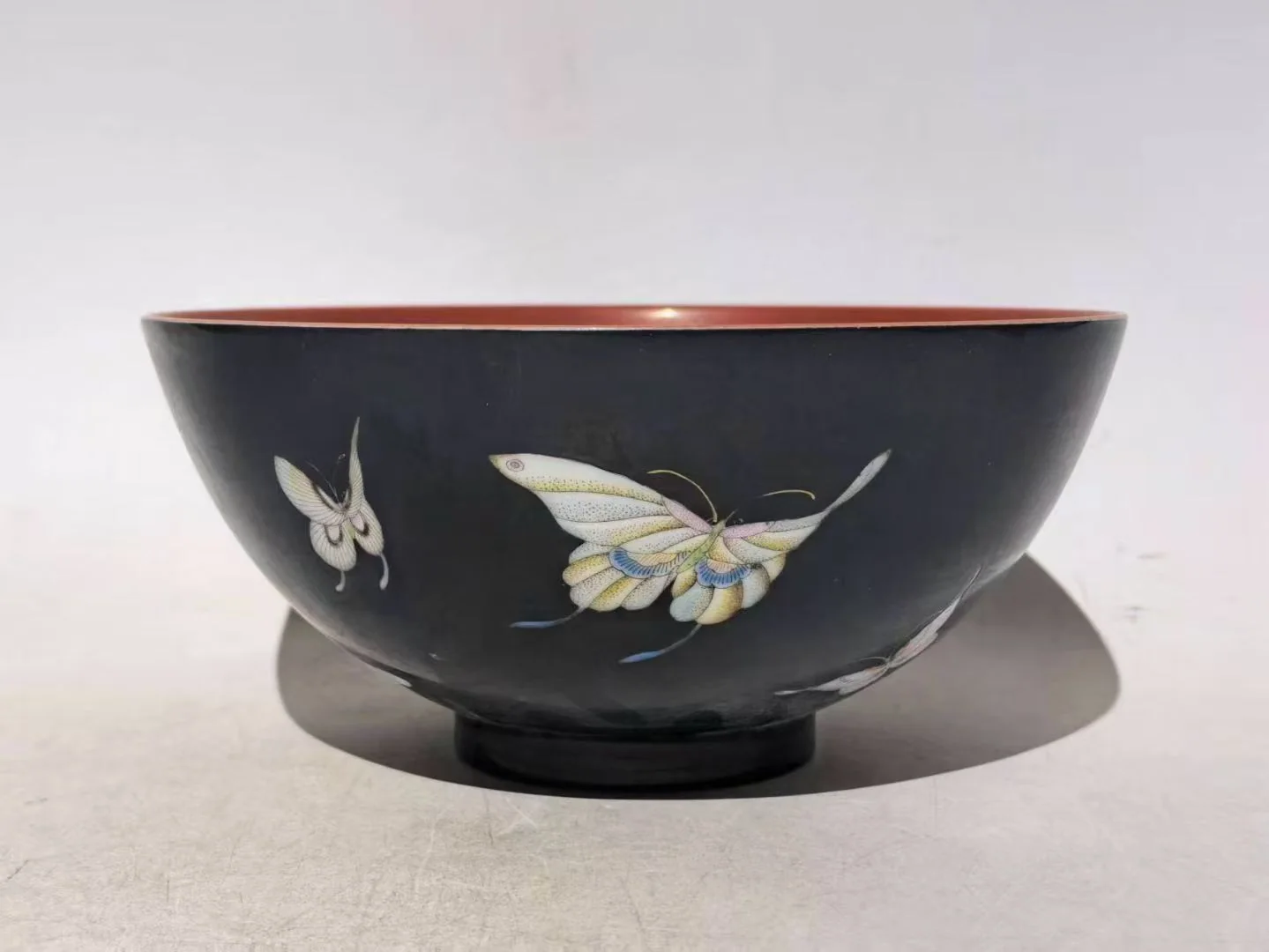
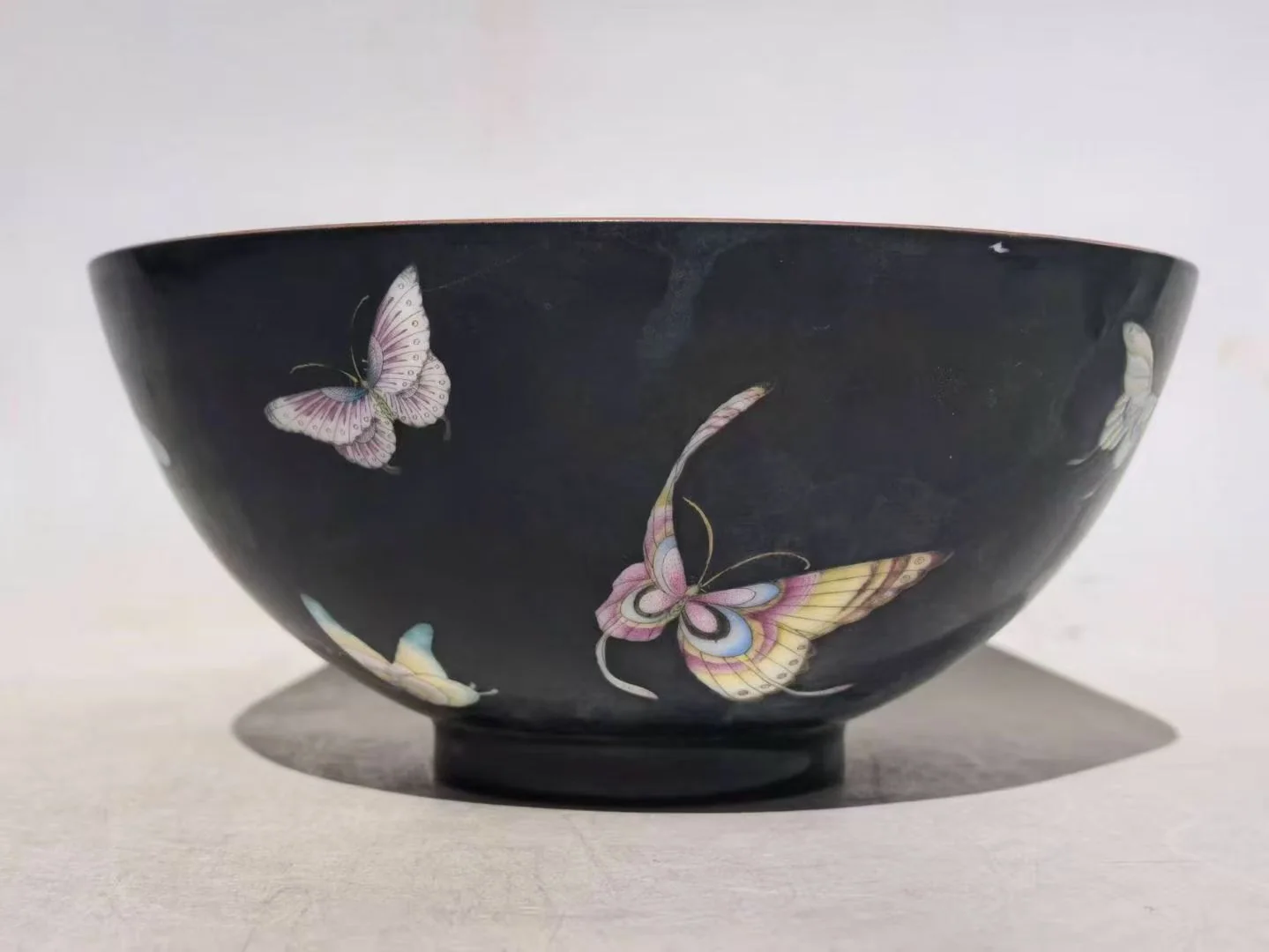
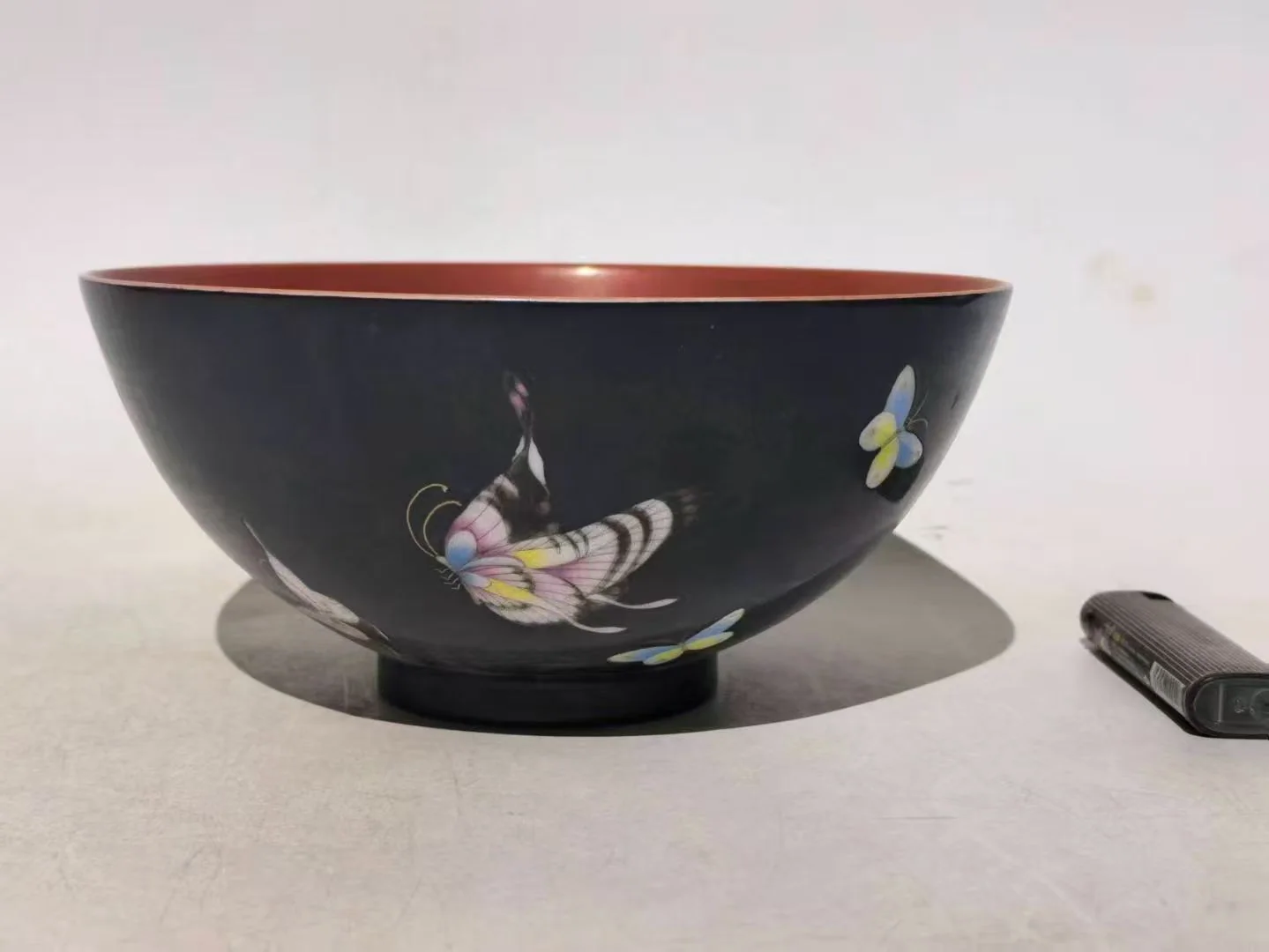
The following uses a submitted piece to illustrate the craft characteristics (describing only visible attributes, with no attribution judgement). The bowl is in the 'palace bowl' form — rounded deep sides, a foot ring, about 16.5 cm in diameter and 7.5 cm high. It is covered overall in a black ground, on which a 'Maodie' pattern is painted in coloured enamels — butterflies in flight with clearly layered tones, a classic Yongzheng garden-scene decorative vocabulary. A reign mark is written on the base, in the same lineage as comparable black-ground falangcai in the Palace Museum and important private collections.
In 'Maodie', 'mao' connotes longevity and 'die' is the butterfly; using the butterfly to signify longevity is a common auspicious composition in Yongzheng falangcai — elegant, with a birthday-wish intent that pairs naturally with the bowl's imperial status.
The value anchor: verifiable public results
Imperial falangcai prices have never rested on word of mouth, but on public sales. Several verifiable records for comparable imperial falangcai bowls form a clear reference:
- 2018, Sotheby's Hong Kong: a Qianlong imperial falangcai bowl with a poppy poem (pink ground) sold for HK$169m; in the same sale a Kangxi pink-ground falangcai flower bowl sold for HK$238.8m.
- 2019, Christie's Hong Kong: a Yongzheng imperial falangcai bowl with a thousand-leaf lotus (white ground) sold for HK$87.2m.
- 2002, Sotheby's Hong Kong: a Yongzheng falangcai bowl with a crimson-ground plum-and-bamboo design sold for HK$7m.
The common thread: all are imperial, with reign marks and superb painting. Together they establish a clear fact — even the more common white- or coloured-ground falangcai bowls already repeatedly reach tens of millions to over a hundred million HKD at public auction; black ground, the rarest of the branches, naturally sits at the apex.
Why black ground sits at the top
The scarcity premium is direct: the fewer comparables exist, the more fiercely each appearance is contested. Black-ground falangcai bowls survive in far smaller numbers than white- or coloured-ground examples; when a fine piece with reliable provenance and outstanding colour and painting appears, the price pushes upward. This is why reference estimates for such pieces are anchored to the top of the comparable-record range.
How such a piece reaches the market
If you hold a Yongzheng black-ground falangcai or comparable imperial piece, we suggest: first send multi-angle photos (the rim, the black-ground painted exterior, the foot mark, the base) with dimensions; our specialists issue a written reference estimate range against public comparables; once aligned, we build a dedicated promotion page for global display. The promotion page for this Yongzheng black-ground falangcai Maodie palace bowl is at the lot page; more porcelain on the platform is on the porcelain category page. The full path is in Consign and Process.
FAQ
- How does black-ground falangcai differ from ordinary falangcai? Black (moydi) ground uses a black enamel ground and was invented under Kangxi; its tone is the hardest to fire, so it is the rarest class of imperial falangcai.
- How many Yongzheng imperial falangcai survive? Across the Kangxi, Yongzheng and Qianlong reigns, imperial falangcai porcelain totals about 400 pieces, over 90% in the Taipei and Beijing Palace Museums; the black-ground branch is rarer still, with very little in private hands.
- Where is the value anchor for a black-ground falangcai bowl? In public results for comparable imperial falangcai bowls: the 2018 pink-ground bowl at HK$238.8m and the 2019 white-ground bowl at HK$87.2m; black ground is rarer and sits at the top.
- How do I consign such a piece? Send multi-angle photos with dimensions and weight; our specialists issue a written reference estimate range against public comparables, then we build a dedicated promotion page — see Consign.
Related reading · more from this series
- Why Falangcai Is So Expensive: Black, Pink and White Grounds Compared — scarcity ranking and records in one read.
- Kangxi black-ground falangcai bowl (on platform) — another black-ground piece currently listed.
- The value logic of a Kangxi black-ground falangcai — scarcity and records for the single piece.